Artificial Intelligence (AI) is now part of everyday life, helping doctors read scans, banks detect fraud, and students write essays. It feels smart, even magical. But here’s the truth: trusting AI without question can be risky.
When we rely on it blindly, we ignore its flaws, biases, and limitations. That’s where the danger begins.
Many people assume that because AI is advanced, it must be correct. But AI is only as good as the data it learns from. If the data is biased, incomplete, or outdated, the results will be flawed.
You may also like: No WhatsApp Without Active SIM
Why Blind Trust Is a Problem?
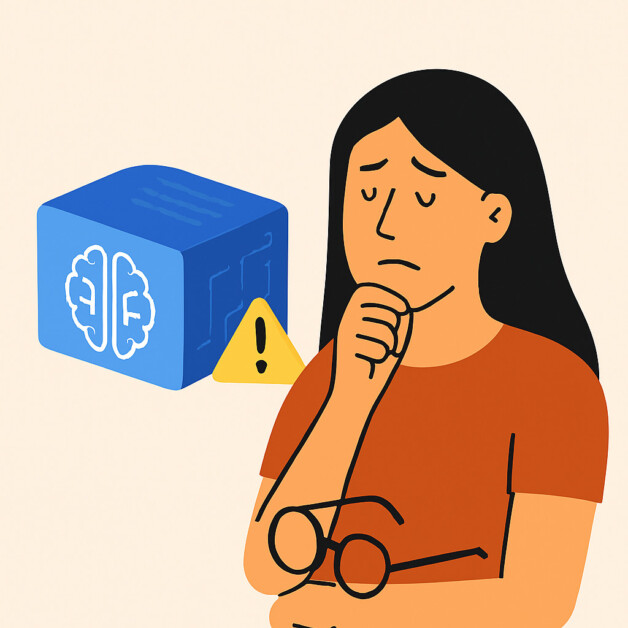
AI is not magic. It learns from data. If the data is wrong or biased, the AI will also give wrong or biased results. When people trust AI blindly, they stop using their own judgment. This can lead to mistakes that affect lives, jobs, and society.
Example: AI in Hiring
A big company once used AI to select job candidates.
- The AI was trained on past resumes of successful employees.
- Most of those employees were men.
- The AI learned this pattern and started rejecting resumes that mentioned women’s colleges or female leadership groups.
The company trusted the AI blindly. They did not check how it was making decisions. As a result, the system discriminated against women. This shows how blind trust can create unfair outcomes.
Other Risky Situations
Healthcare: AI misreads a scan, leading to a wrong diagnosis.
- Finance: Automated trading systems cause sudden market crashes.
- Law Enforcement: Predictive policing tools unfairly target certain communities.
How to Stay Safe
Question AI outputs: Don’t accept results without checking.
- Keep humans in control: Use AI as a helper, not the final decision-maker.
- Ask for transparency: Know how the AI reached its answer.
- Balance trust with caution: Trust AI, but verify its results.
In Short:
AI is powerful, but it is not perfect. The real danger is not AI itself—it is when humans stop questioning it. Blind trust can turn a helpful tool into a silent threat.
Source: Psychology Today